The Wall in Southern Arizona artwork by Ricardo Santos Hernández

The Wall in Southern Arizona

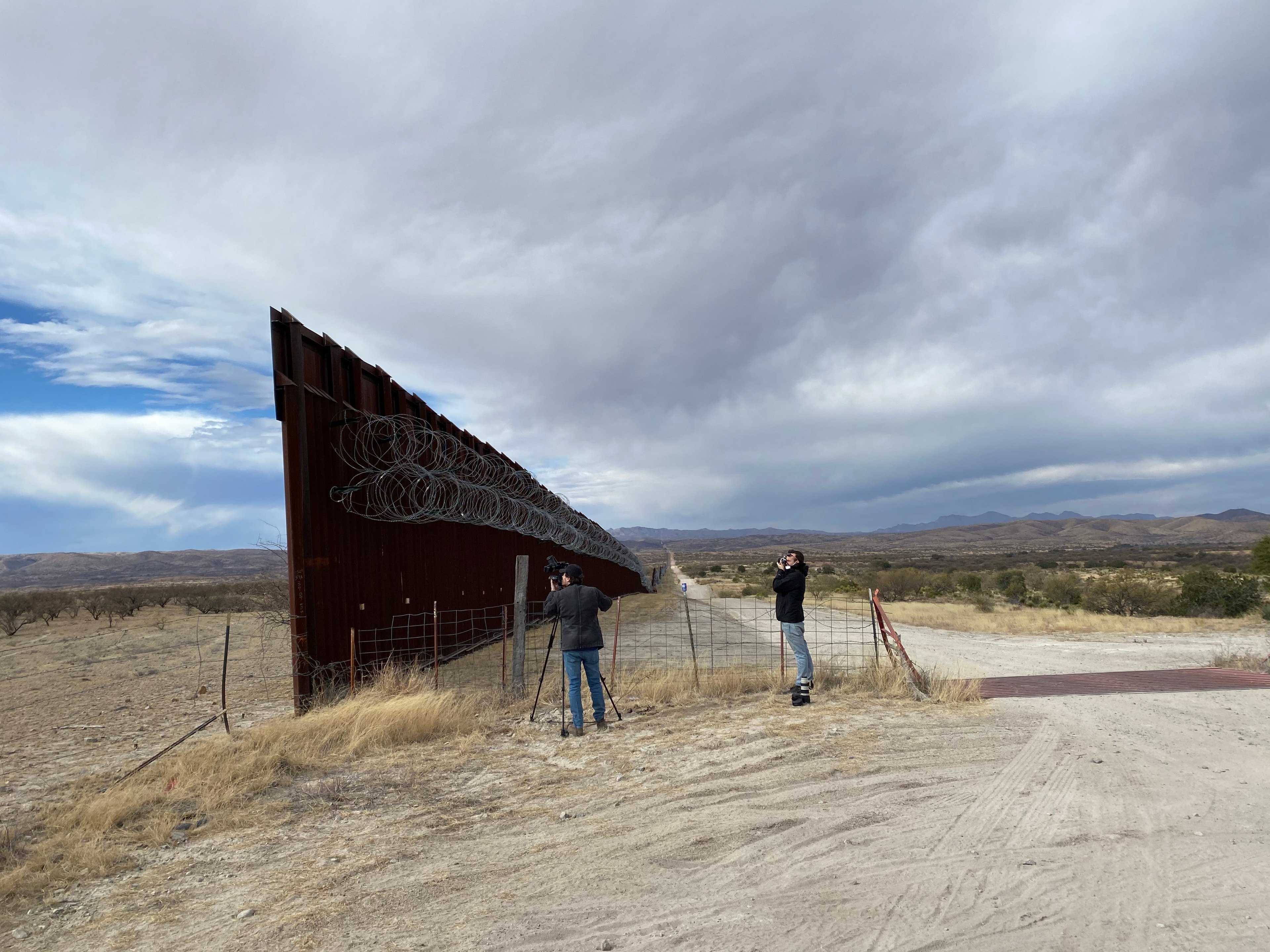
El Muro / The Wall — Kino Springs, near Nogales, southern Arizona. This photograph witnesses the end of wall construction at the close of Trump's first occupation of the White House. Today, construction continues with severe devastation to the desert environment — endangering natural habitats, migratory animals, and the sacred sites of First Peoples. by Ricardo Santos Hernández
El Muro / The Wall — Kino Springs, near Nogales, southern Arizona. This photograph witnesses the end of wall construction at the close of Trump's first occupation of the White House. Today, construction continues with severe devastation to the desert environment — endangering natural habitats, migratory animals, and the sacred sites of First Peoples. — Ricardo Santos Hernández
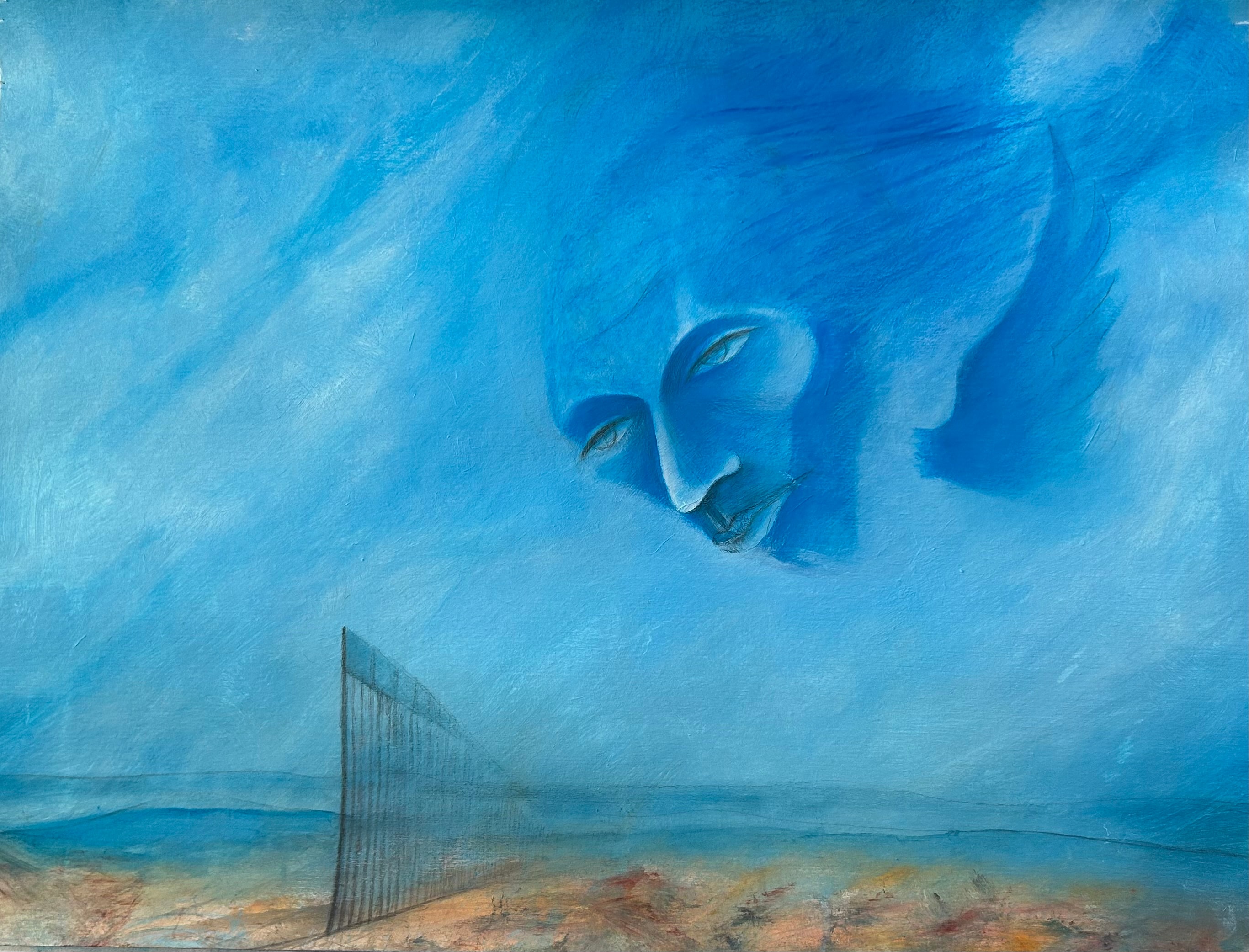
Guardian of the Desert — Inspired by Odilon Redon's Guardian of the High Seas. The guardian spirit watches over the Sonoran desert as the wall cuts across the land near Kino Springs, southern Arizona. by Ricardo Santos Hernández
Guardian of the Desert — Inspired by Odilon Redon's Guardian of the High Seas. The guardian spirit watches over the Sonoran desert as the wall cuts across the land near Kino Springs, southern Arizona. — Ricardo Santos Hernández
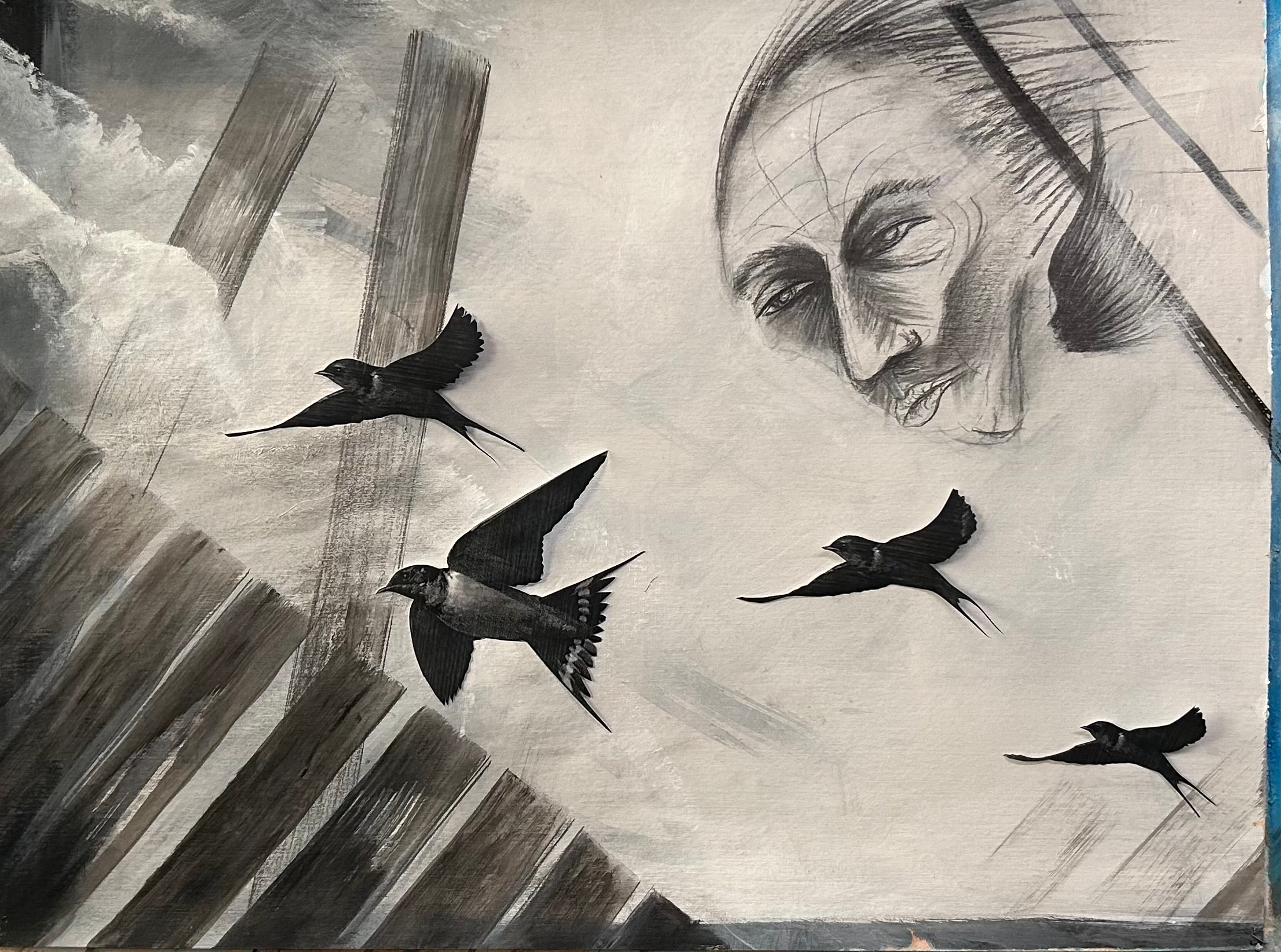
Guardian of the Swallows — Mixed media. A tribute to Lupita, Ricardo's sister, who worked diligently to preserve the passage and survival of the swallows' migration to their summer destination along the southern border near Kino Springs. by Ricardo Santos Hernández
Guardian of the Swallows — Mixed media. A tribute to Lupita, Ricardo's sister, who worked diligently to preserve the passage and survival of the swallows' migration to their summer destination along the southern border near Kino Springs. — Ricardo Santos Hernández
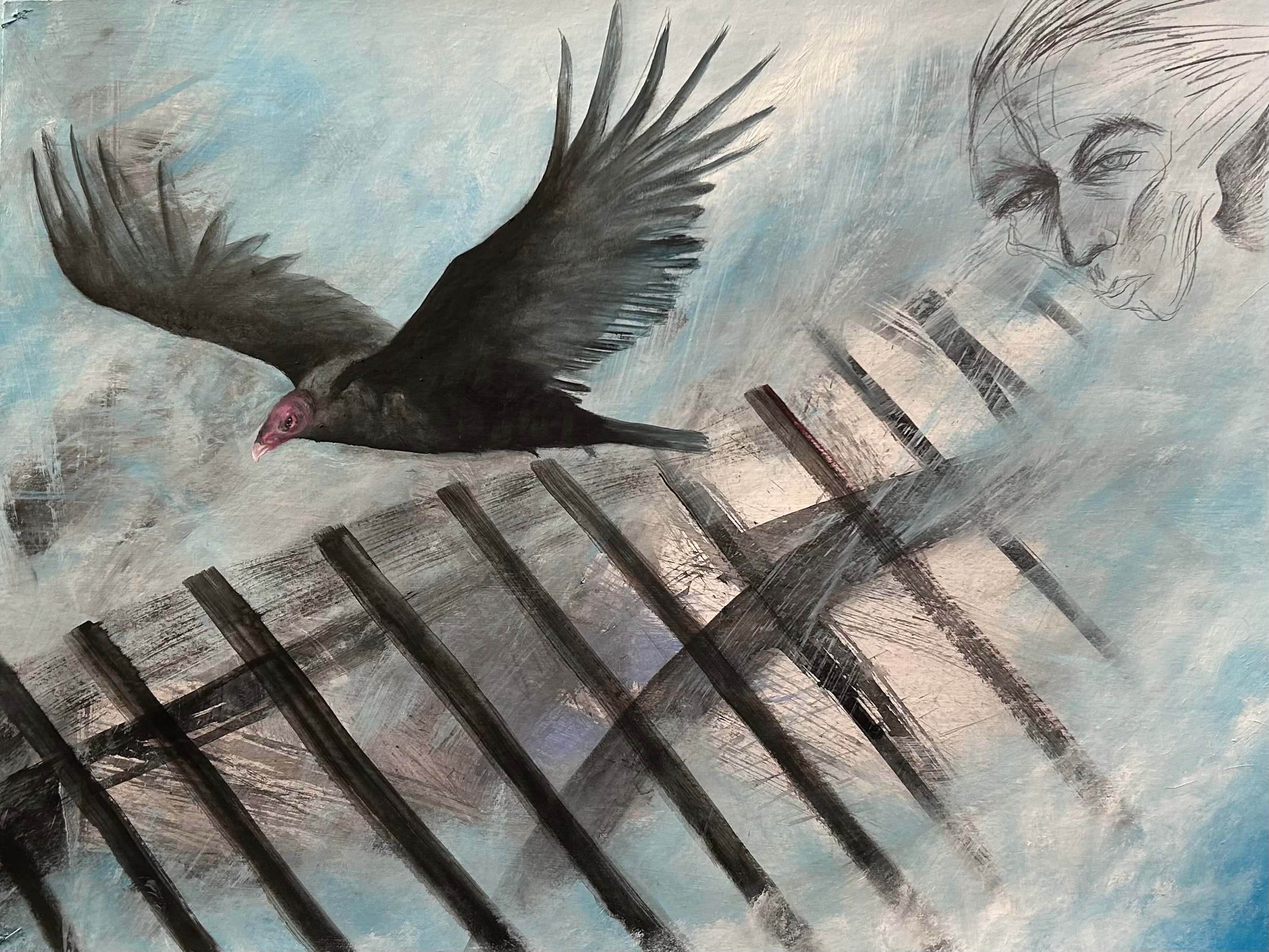
Guardians — Mixed media. Witness to the environmental and moral destruction taking place along the Mexico–United States border in southern Arizona. The turkey vulture — wirum in Yaqui — hovers freely over the metal barrier, knowing no boundaries. by Ricardo Santos Hernández
Guardians — Mixed media. Witness to the environmental and moral destruction taking place along the Mexico–United States border in southern Arizona. The turkey vulture — wirum in Yaqui — hovers freely over the metal barrier, knowing no boundaries. — Ricardo Santos Hernández
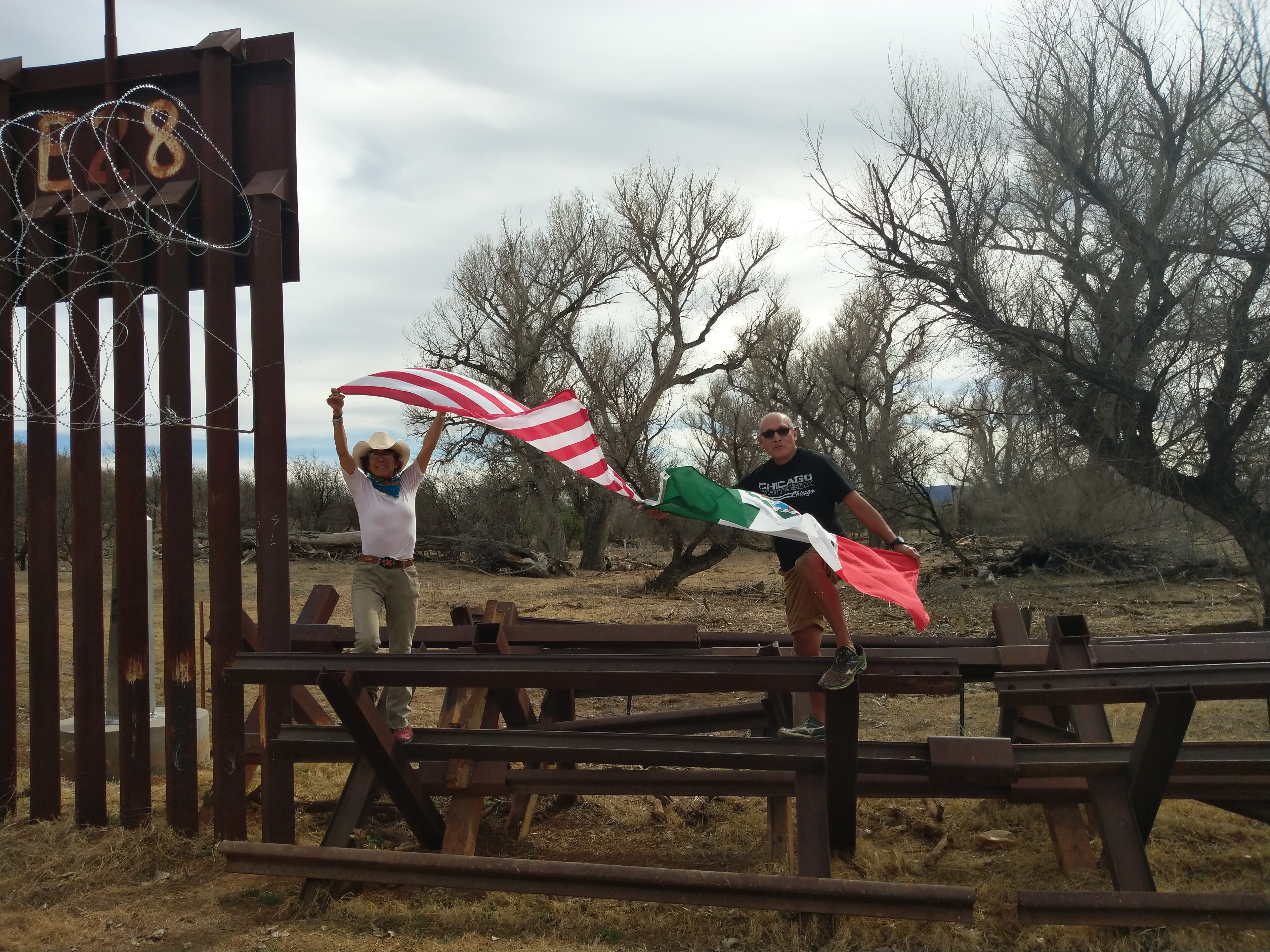
Raechel Running and Ricardo at the barrier wall on the Santa Cruz River, where the Santa Cruz reenters Arizona after venturing through Sonora, Mexico. The Santa Cruz is the only river in North America that meanders northward — nature knows no boundaries. Photograph by Raechel Running, well-known photographer and activist. by Ricardo Santos Hernández
Raechel Running and Ricardo at the barrier wall on the Santa Cruz River, where the Santa Cruz reenters Arizona after venturing through Sonora, Mexico. The Santa Cruz is the only river in North America that meanders northward — nature knows no boundaries. Photograph by Raechel Running, well-known photographer and activist. — Ricardo Santos Hernández
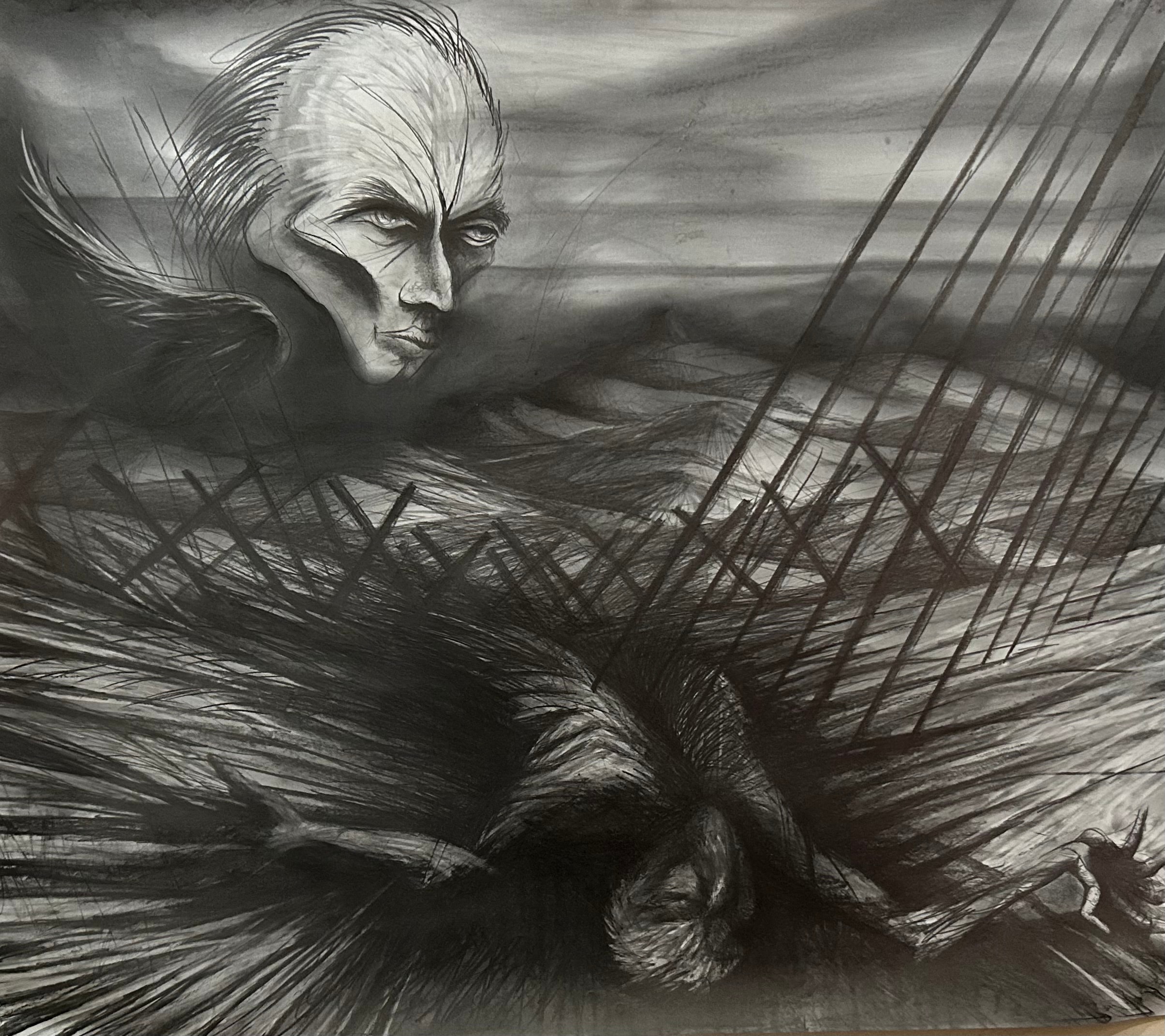
The Santa Cruz River has a soul — Large charcoal drawing. This work takes place at Mascareñas, the point where the Santa Cruz River reenters Arizona after meandering through Sonora, Mexico for two miles. Once an oasis where the river flowed freely — home to a diversity of birds, insects, and four-legged animals, a resting place for migratory species — this sacred ground is now occupied by vigilante groups, Border Patrol, and construction crews building the new border wall. It is the same location where Raechel Running and Ricardo are photographed protesting with the Mexico and United States flags. by Ricardo Santos Hernández
The Santa Cruz River has a soul — Large charcoal drawing. This work takes place at Mascareñas, the point where the Santa Cruz River reenters Arizona after meandering through Sonora, Mexico for two miles. Once an oasis where the river flowed freely — home to a diversity of birds, insects, and four-legged animals, a resting place for migratory species — this sacred ground is now occupied by vigilante groups, Border Patrol, and construction crews building the new border wall. It is the same location where Raechel Running and Ricardo are photographed protesting with the Mexico and United States flags. — Ricardo Santos Hernández
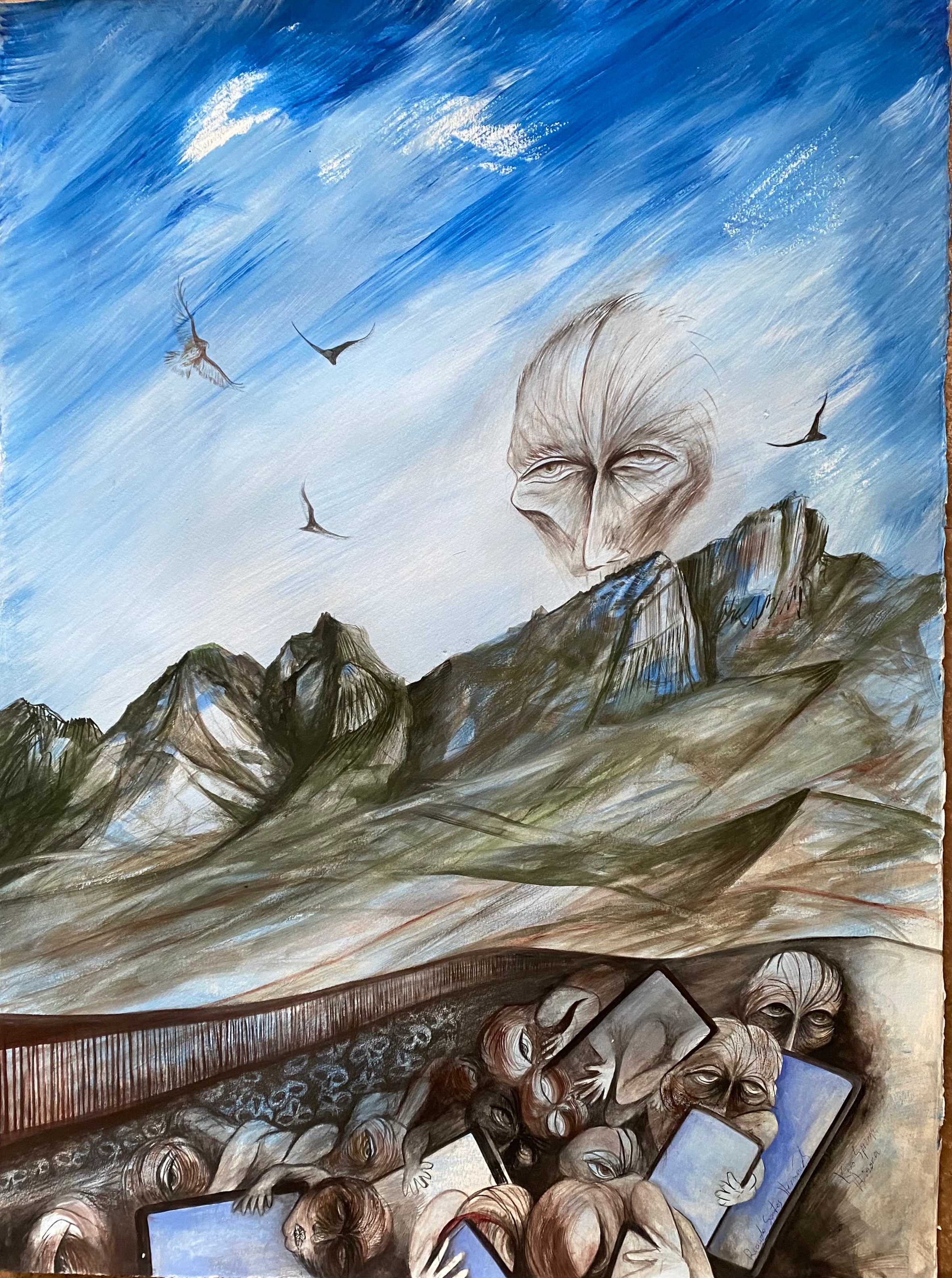
Picachos de Mascareñas (The Mascareña Peaks) — Ricardo Santos Hernández. Mixed media on gessoed Arches paper: gouache, tempera paints, and graphite. The Picachos de Mascareñas rise majestically over the southern wall that separates the United States from México — ancient volcanic peaks that have watched over this land for millennia, long before any border was drawn across it. For the Hohokam and their descendants who lived along the Santa Cruz River, these peaks held deep spiritual and cultural significance, landmarks of identity and belonging in a landscape that was theirs. Ricardo's portrait emerges from the Picachos themselves — his face becoming the mountain, the guardian of this ancient domain. His home in Kino Springs, Arizona sits above a ridge of this beautiful land, and his eyes in this painting are the eyes of the peaks: watchful, enduring, sovereign. Below, along the base of the wall, huddled figures clutch glowing screens — the distracted, the displaced, the documented — while birds soar freely overhead, crossing the border the way the land always intended: without permission, without papers, without fear. Gouache and tempera give the sky its luminous blue sweep; graphite traces the peaks and the portrait with the weight of stone and memory. by Ricardo Santos Hernández
Picachos de Mascareñas (The Mascareña Peaks) — Ricardo Santos Hernández. Mixed media on gessoed Arches paper: gouache, tempera paints, and graphite. The Picachos de Mascareñas rise majestically over the southern wall that separates the United States from México — ancient volcanic peaks that have watched over this land for millennia, long before any border was drawn across it. For the Hohokam and their descendants who lived along the Santa Cruz River, these peaks held deep spiritual and cultural significance, landmarks of identity and belonging in a landscape that was theirs. Ricardo's portrait emerges from the Picachos themselves — his face becoming the mountain, the guardian of this ancient domain. His home in Kino Springs, Arizona sits above a ridge of this beautiful land, and his eyes in this painting are the eyes of the peaks: watchful, enduring, sovereign. Below, along the base of the wall, huddled figures clutch glowing screens — the distracted, the displaced, the documented — while birds soar freely overhead, crossing the border the way the land always intended: without permission, without papers, without fear. Gouache and tempera give the sky its luminous blue sweep; graphite traces the peaks and the portrait with the weight of stone and memory. — Ricardo Santos Hernández